
Thin Spaces
The transparency and fragility of sacred places

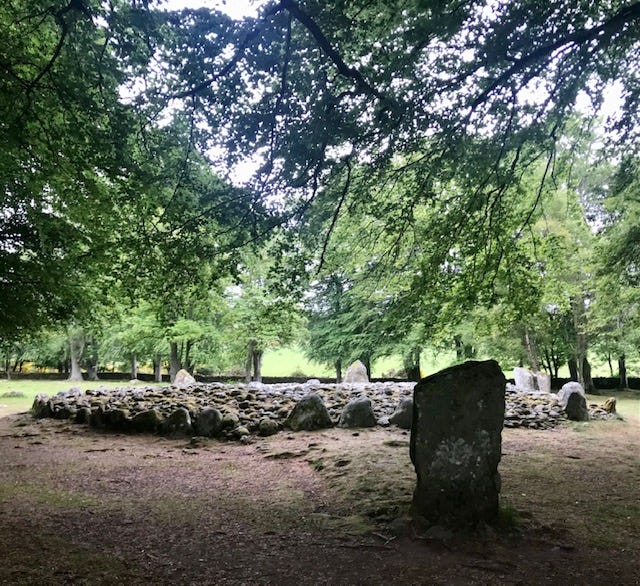
The Clava cairns are circular burial chambers made of stone, created by Bronze Age Picts. There are some 50 cairns of this type in the area surrounding Inverness, Scotland. Not much is known about them, but they are of complex geometric design. Some of them are entirely enclosed, but most have an entrance facing southwest toward the midwinter sunset.

There is a profound beauty to this sacred place, which has endured for some 4,000 years as a monument to the mytery of life and death. It is a numious place redolent with awe of the divine in creation. One can only speak in whispers here, if at all. No words are required to convey its message of transcendent power. It is felt, viscerally.
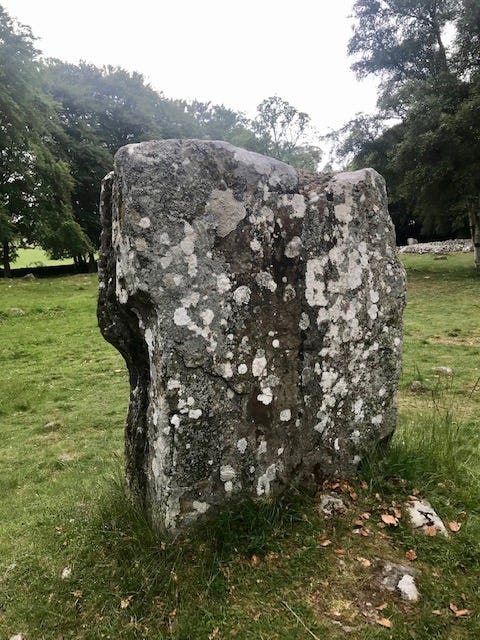
One of the striking things about the Clava cairns is that they are accessible by a one-lane country road in the middle of farmland. There is no security guarding this archeological and cultural treasure. It remains completely open, without any effort to contain or control its spiritual potency. This is, I think, an enduring quality of all thin spaces. They resist our efforts to instrumentalize them.

Thin spaces are powerful, yet fragile, subject to the vagaries of time and human intervention. The ruins of Beauly Priory in Scotland are a poignant testament to this truth. Founded in about 1230 by Valliscaulian monks from France (a strict, reformed Benedictine order), it was transferred to the Cistercian order in 1510 on the eve of the Reformation. During the next century, it was confiscated by the crown, the monks were run off, and the priory fell into disrepair. It became a graveyard.
In an era of climate change, when so many sacred places are being altered beyond recognition if not destroyed altogether, Beauly Priory serves as a warning that our response to the transcendent power of thin spaces matters. When sacred places are honored they can give meaning even to death. When they are abused and neglected, the paradise of thin spaces can be reduced to a charnal house - haunting, rather than inspiring, our imaginations. Every place is potentially a thin space, if we have eyes to see.
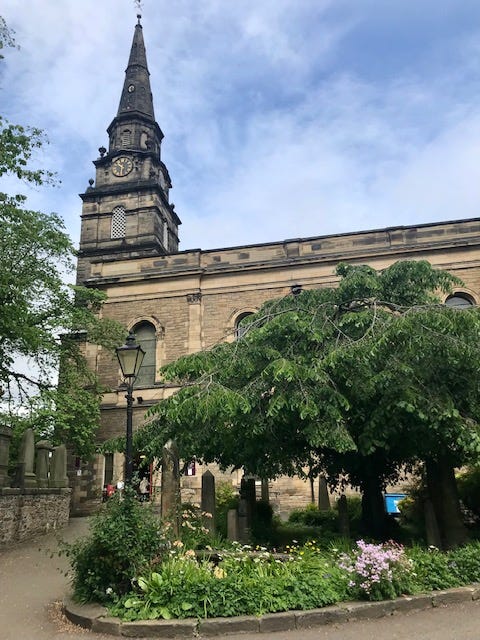
The preservation of thin spaces is holy work. I’m so grateful that places like St. Cuthbert’s Parish in Edinburgh, which has been a place of continuous Christian worship for more than 1,300 years, are still here. And for places like its neighbor, St. John’s Scottish Episcopal Church, where I worshipped last Sunday. St. John’s is striking the right balance between preserving the continuity, and expressing the ever-new vitality, of thin spaces. Its commitment to environmental justice through its innovative “Earth Be Glad” ministry is a model.
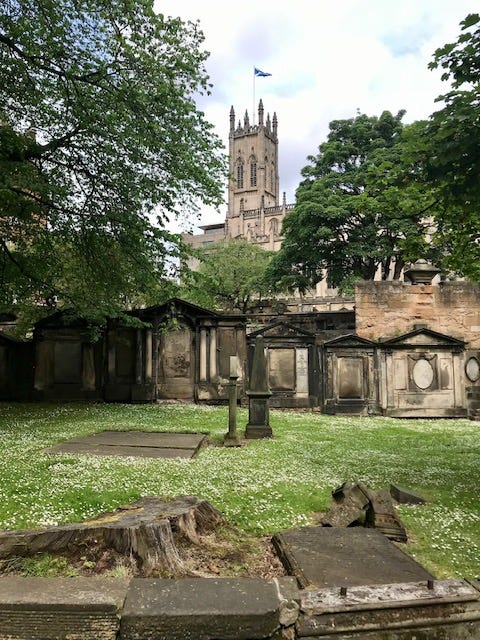
All of us, in our local communities, of whatever spiritual tradition or none, have a moral obligation to protect and extend the healing and transfiguring power of the thin spaces we occupy. Our broken world needs these sacred spaces now, more than ever.

Where are the thin spaces that feed your soul? What are you willing to do to protect and extend our perception of the earth as a sacred place?